With the traditional effigies already installed along the Malecón and the iconic Plazuela Machado, the spirit of the 2026 Mazatlán International Carnival, “¡Arriba la Tambora!” (Long Live the Drum!), begins to vibrate, becoming a visual attraction that anticipates the arrival of the port’s biggest celebration and pays homage to banda music, the sea, and the historical identity of the port.
As in every edition, these monumental figures not only adorn the port’s public spaces but also represent an essential chapter of the Mazatlán Carnival and Sinaloan culture, where the works, created by renowned local and international artists, engage in a dialogue between tradition, collective memory, and a festive vision.
One of these effigies is ‘El Arlequín Pachanguero’ (The Party-Grooming Harlequin), created by the artist Jorge González Mata. It directly embodies this year’s theme by fusing the classic figure of the carnival jester with the rhythmic heart of Sinaloa. Carrying a red drum in front, a snare drum, and cymbals on its back, it seems to move to the beat of the music, like a walking orchestra marking the rhythm of Carnival along the Malecón, displaying a jubilant expression and colorful costume, a symbol of revelry.
From a marine perspective emerges ‘Sinfonía del Pacífico’ (Symphony of the Pacific), a work by the Cuban painter and sculptor Henry Wilson. It depicts a sperm whale emerging vertically from the ocean, adorned with tubas and trumpets, fundamental instruments of banda music, while a seagull and a dancing couple crown the composition, achieving a harmonious fusion between the sea, its fauna, music, and the dance traditions of the port.
Banda music finds a direct homage in ‘¡El Compa Tuba!’, also by González Mata, where the figure of a smiling musician, dressed in traditional attire, highlights the importance of the tuba as the rhythmic and harmonic foundation of the genre, celebrating the powerful sound that identifies Sinaloa and that will be a highlight during the carnival festivities.
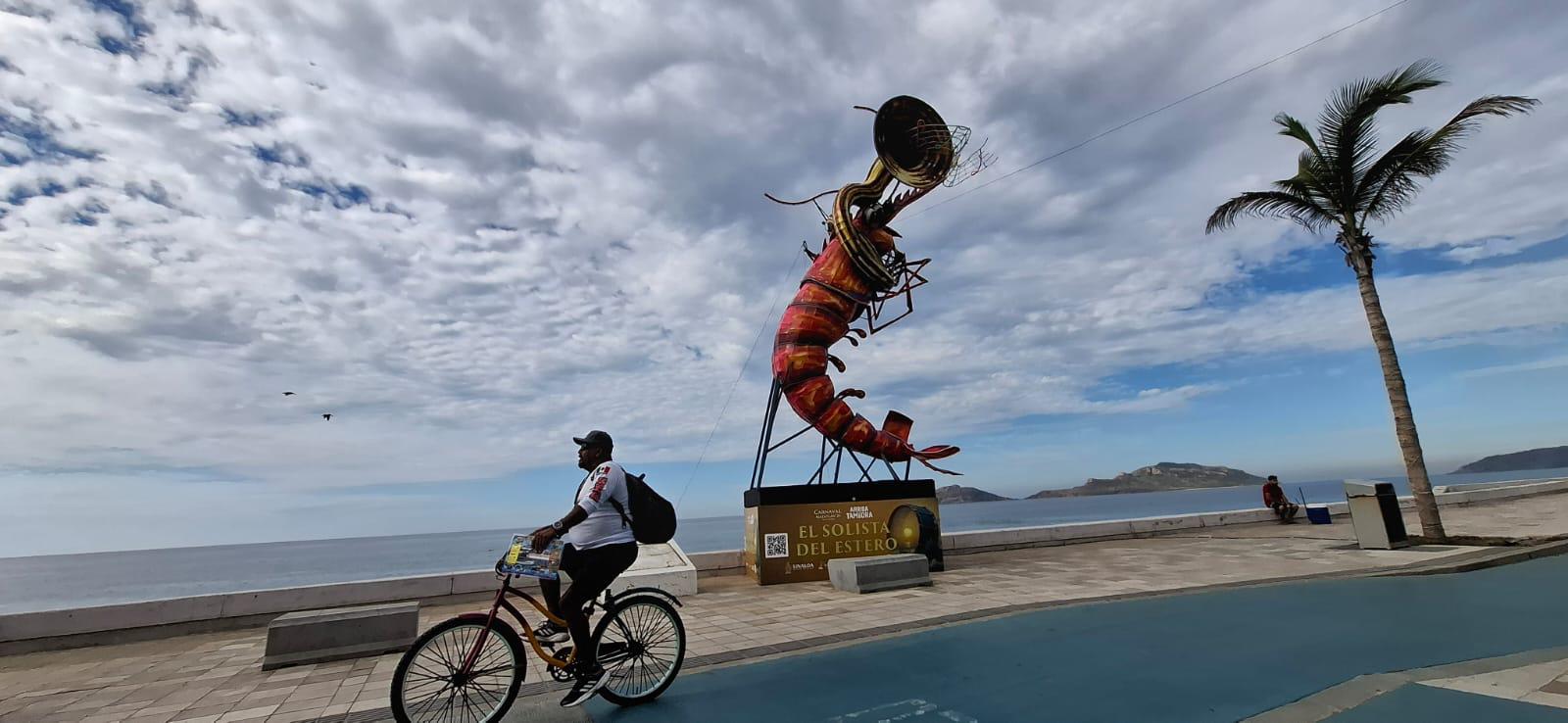
The Cuban artist Wilson contributes a lucid and local touch with ‘El Solista del Estero’ (The Soloist of the Estuary), an allegory featuring a multicolored shrimp playing a golden tuba, where musical notes floating in the air reinforce the idea of a living melody, while the figure pays tribute to Mazatlán’s fishing heritage and its deep connection to music.
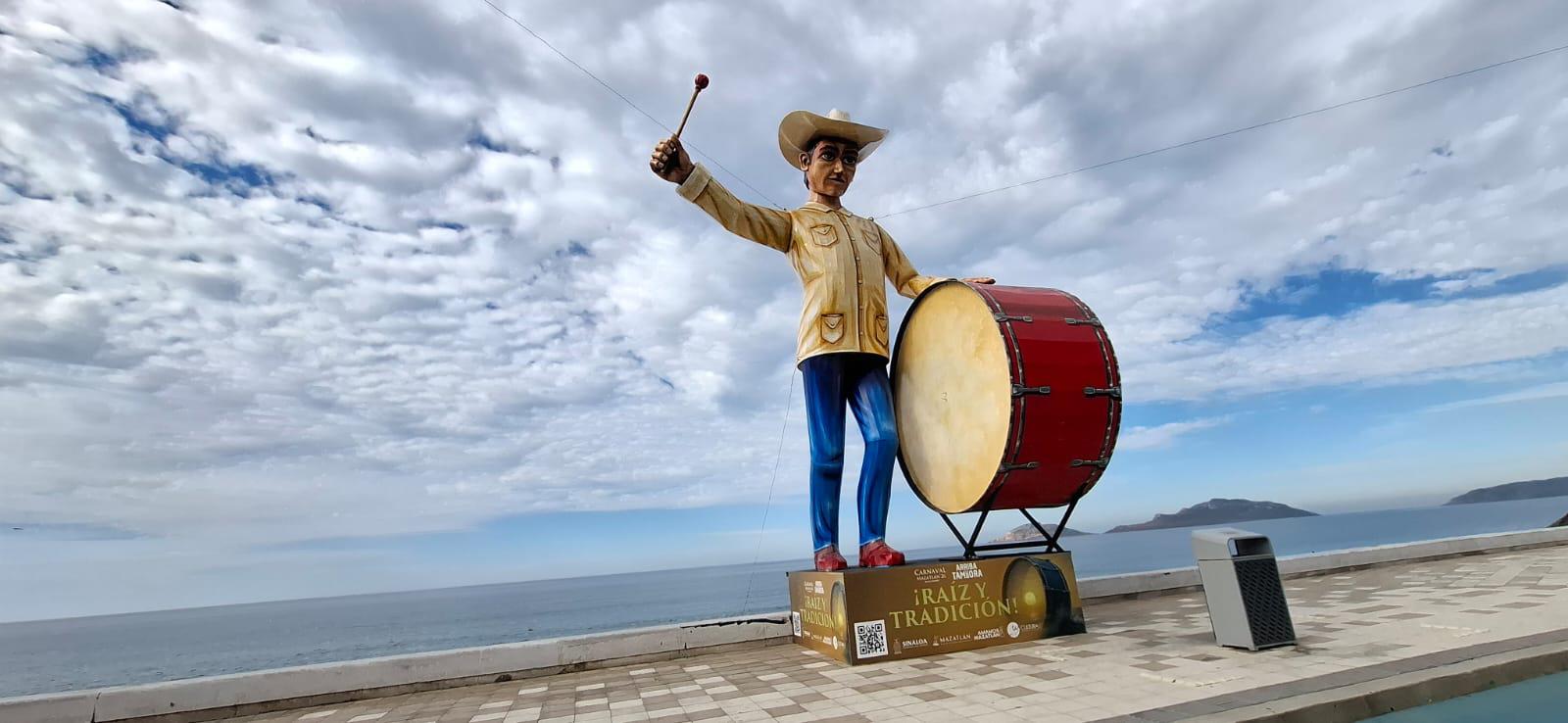
The origin and history of the Mazatlán Carnival are also present in González Mata’s work, ‘¡Raíz y Tradición!’ (Root and Tradition!). This effigy represents a musician in the midst of performing, captured just before the drumstick strikes the bass drum. His firm posture and serene expression convey pride, hospitality, and respect for the roots that shaped the wind and percussion music of this grand Mexican Pacific celebration.
Bearing the same motto as the Carnival, Wilson’s effigy, ‘Arriba la Tambora’ (Long Live the Bass Drum), presents a piece laden with symbolism. A child emerges from the sea playing the trumpet on a bass drum decorated with waves and a fishing rod, alluding to the talent born in childhood, the hope, and the social unity that music generates during this grand celebration.
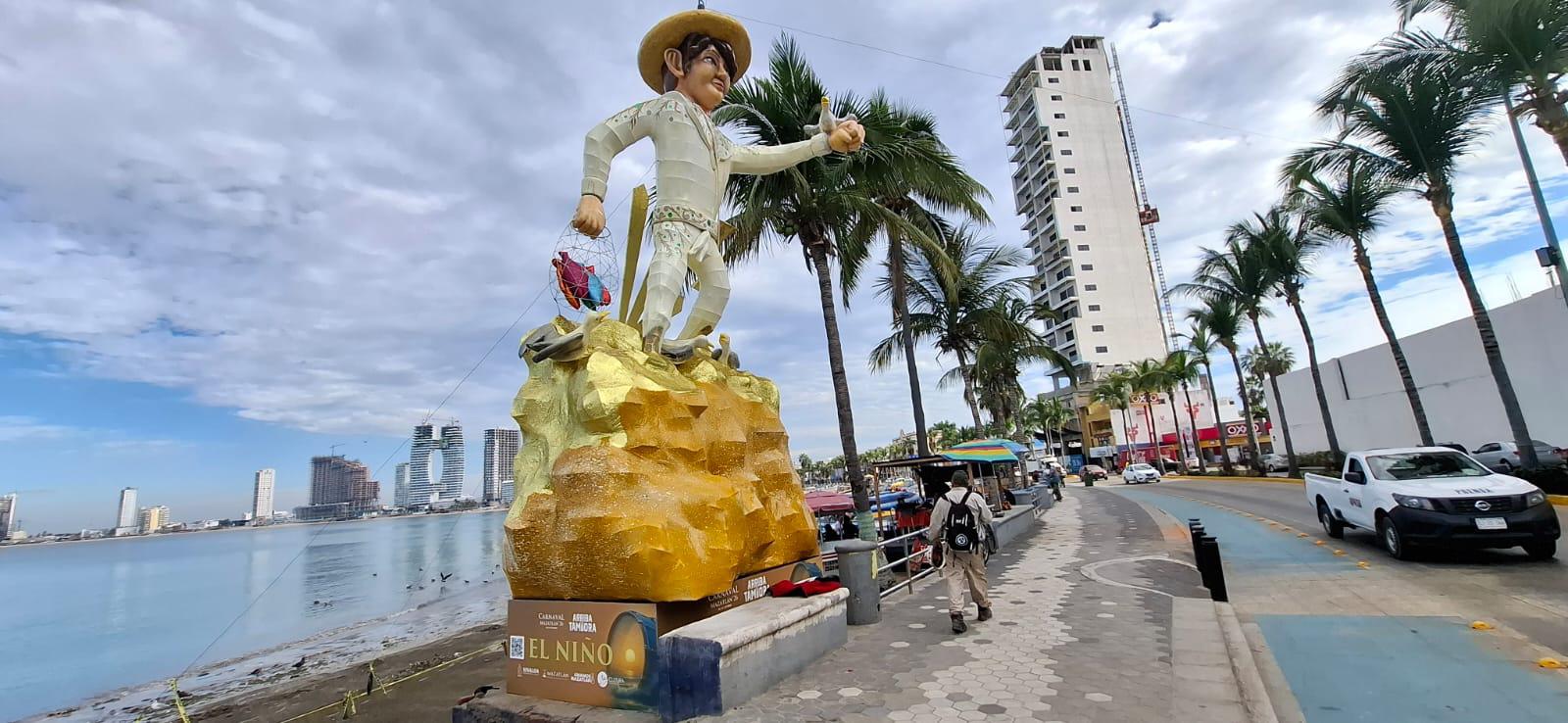
In the creation of the Ninots team made up of José Ángel Trujillo López from Mazatlán and Juan José Boronat from Valencia, childhood as a pillar is reflected in the work ‘El Niño’, a sculpture that shows an infant with a fishing net and a seagull, symbolizing the harmony between the human being and the marine environment, as well as the greatness of the dreams that give continuity to the carnival identity.
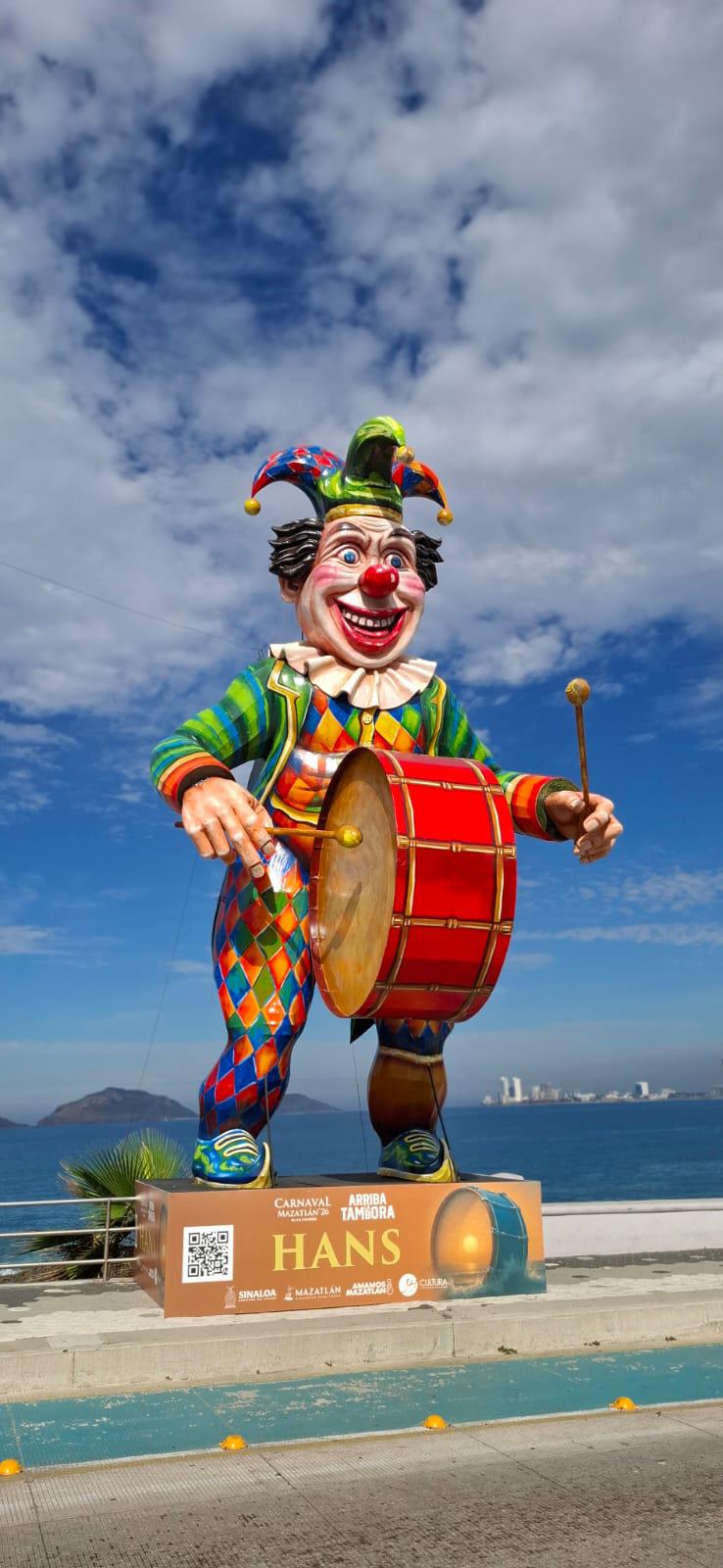
Also from the Ninots team comes the effigy ‘Hans,’ an imposing figure that pays homage to the historical link between Germany and Sinaloa in the birth of banda music, characterized as a European harlequin. Hans is a one-man band that integrates a bass drum, trumpet, cymbals, and drum kit, with detailed modeling and a theatrical presence, reinforcing the festive and international character of Carnival.
Finally, ‘La Sirena de la Banda’ (The Mermaid of Banda), a work by González Mata, fuses marine mythology with the sonic power of Sinaloa, where the mermaid emerges from a seashell holding a trumpet, in the middle of a performance, while her Venetian mask recalls the fantastical essence of Carnival, evoking, through the colors of her tail and hair, the hues of the Mexican Pacific and the tropical energy of the port.
In this way, through these pieces, Mazatlán not only beautifies its public spaces, but also reaffirms its cultural and musical identity, where the effigies of the 2026 Carnival become symbolic guardians of tradition, inviting locals and visitors to experience a celebration where the sea, music and history beat in unison.
Source: noroeste