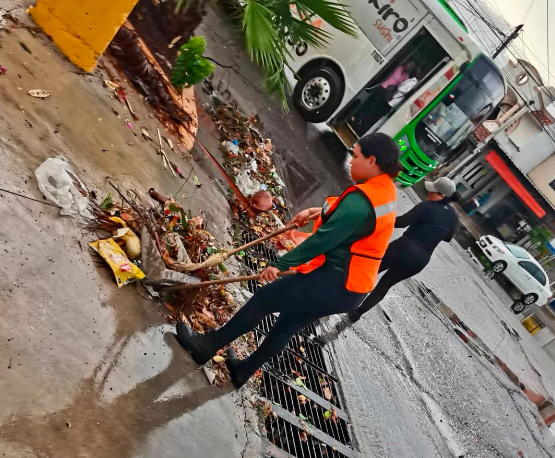

The intense rainfall of July 29, 2026, struck Mazatlán with unusual force. During the early morning hours, between 159.5 and 161 millimeters (6.3–6.3 inches) of rain fell across the city, caused by the interaction between the Mexican Monsoon and a trough. The heavy downpour triggered rapid and severe flooding that caught many residents by surprise while they were asleep.
Another important factor was that the region had already experienced several consecutive weeks of rainfall. As a result, the ground had become saturated, making flooding and water accumulation much more likely. This situation was further worsened by storm surge and elevated waves generated by Hurricane Genevieve, which reached Mexico’s Pacific coast.
Another contributing factor was human activity. Urban density and trash blocking storm drains significantly increased street flooding and aggravated the severity of the inundations.
Water entered dozens of homes and reached alarming levels. In neighborhoods such as Ampliación Urías and other southern areas of the city, floodwaters exceeded one meter (over three feet) inside some houses. According to recent reports, approximately 35 homes in 23 neighborhoods were directly affected, with families watching their belongings suffer damage from contaminated floodwater.
Overflowing Waterways Worsened Flooding on Streets and Avenues
Streams and drainage channels overflowed critically. The Jabalíes Stream experienced a major overflow, as did the Laguna del Camarón. Around 11 stormwater channels reached dangerously high levels, forcing the closure of at least seven major road crossings and leaving several avenues impassable for hours, according to reports from emergency responders and local media.
Fortunately, no fatalities had been reported at the time of publication. However, affected families faced significant financial losses and the need for extensive cleanup of their homes.
Material damage was considerable, though localized. In addition to flooded homes, authorities reported fallen trees, deep water accumulation on streets, and damage to road infrastructure.
Dozens of Emergencies Handled Within Hours
Emergency response agencies attended to more than 74 incidents across 24 neighborhoods. Firefighters, Civil Protection personnel, the Mexican Army, and the Navy rescued stranded motorists, carried out preventive evacuations, and helped residents cross flooded streets, particularly in areas such as Lomas de Juárez and Ampliación Urías.
Authorities responded immediately by launching a coordinated interagency operation. Assessment tours were conducted alongside the Public Works Department to identify blocked drainage systems, while the Mexican Army activated the DN-III-E Emergency Plan. State and municipal Civil Protection agencies coordinated rescue and relief efforts.
Temporary Shelter Prepared as a Precaution
As a preventive measure, the State and Municipal DIF prepared the Instituto Cultural de Occidente to serve as a temporary shelter for vulnerable families. However, by the end of the initial assessments, no large number of evacuees had been reported, as many residents chose to stay with relatives instead.
Residents are encouraged to call 911 in the event of any emergency.
During the early hours of July 30, rescue operations and damage assessments were still underway. While floodwaters had begun to recede in some areas, authorities continued inspecting homes, clearing roadways, and preparing the official damage assessment. Officials also warned that rainy conditions could persist, urging the public to remain cautious while prioritizing assistance for the families most severely affected.
Source: meteored