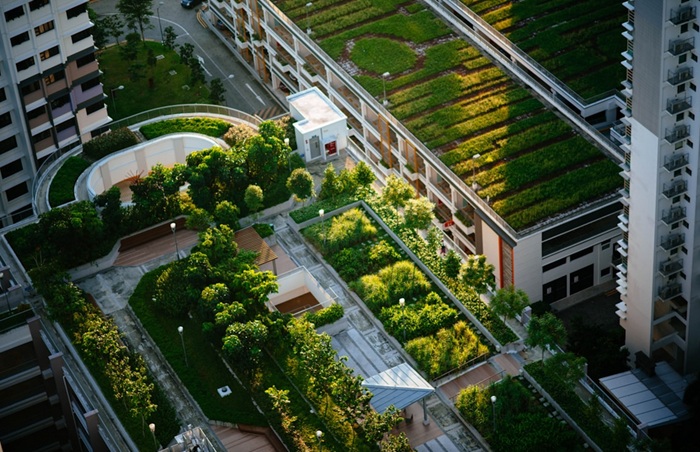

The Amaitlan Garden City in Mexico was once envisioned as the world’s first sustainable model city. The city’s plan aimed to conserve 70 percent of the island as green space and keep 95 percent of buildings below palm tree height. The city also set goals like 100 percent recycling of waste and wastewater, all in pursuit of true sustainability.
But none of it ever happened. Amaitlan does not exist, nor is anyone talking about this plan anymore.
The Amaitlan project failed, but its failure is something we can learn from. More specifically, the project’s failure shows the work needed to actually plan a sustainable model city.
So, how exactly do you plan a sustainable model city?
Prioritizing Walkability and Public Access
Places like Cancún in Mexico are known to be some of the most walkable cities in the world. And this is an important factor for sustainability.
A proper sustainable city begins with how people move around. It should be a place where walking is safe and enjoyable. Sidewalks can’t just be afterthoughts. They need shade, room, and connections to key areas like schools, markets, and workplaces.
At the same time, public transit should be more than just a backup option. It must be clean, reliable, and convenient enough that people choose it over cars. Trains, trams, and buses all have a role. If your city’s layout encourages people to ditch private cars, you’re already winning a big part of the sustainability battle.
Alternate Fuel Stations for Supporting Green Transportation
Another major piece of the puzzle is green transportation. It’s not enough to reduce gas-powered traffic. Your city should also make it easy for people to switch to cleaner options. That means setting up charging stations for electric vehicles in all neighborhoods. It also means making bike lanes wide and safe enough for real daily use.
But there’s more on the horizon than just electric cars. Hydrogen vehicles are starting to attract attention, especially for heavier transport. These vehicles need a very different type of infrastructure.
To support them, your city must invest in modern hydrogen fuel stations and build systems to store and distribute hydrogen safely. Technologies, including solid hydrogen storage, are becoming more advanced. These solutions make it easier to store hydrogen and deliver it where it’s needed.
Also, as H2MOF notes, such hydrogen storage technologies guarantee efficiency and safety. Hence, compared to traditional hydrogen storage methods, the modern ones are far better at helping cities achieve sustainability.
Buildings That Actually Work for the Climate
Energy-efficient buildings are a given, but you’d be surprised how many cities still don’t enforce proper standards. A model city can’t afford that. Every building should be designed for its climate.
In hot regions, like certain parts of Mexico, natural ventilation should be built into the design. In cooler places, insulation must be tight. Passive solar heating and green rooftops shouldn’t be options. They should be standard.
This also means thinking about how people actually use these buildings. Offices and schools should get natural daylight whenever possible. Homes should have enough space for families to live comfortably without cranking the AC or heat all day.
If you make the buildings work for the people, energy efficiency becomes a natural part of the day.
Make Waste and Water Everyone’s Business
Sustainable cities don’t treat waste and water as side issues. These are core services that need thoughtful planning. Composting, recycling, and waste-to-energy programs should be fully built into every neighborhood.
No one should have to wonder where to take food scraps or how to recycle electronics.
Water is just as important. Rainwater collection and greywater systems help reduce pressure on local supplies. Public education also plays a big role here. If people don’t understand how these systems work, they won’t use them.
A smart city doesn’t just build great infrastructure. It brings everyone on board.
Green Spaces That Don’t Just Look Pretty
Every sustainable city needs green spaces, but they shouldn’t just be for decoration. They should serve a purpose.
Trees help cool streets. Parks manage stormwater. Rooftop gardens can produce food or support pollinators. You want nature woven through the entire layout of the city, not just tucked away in a central park.
It’s also about access. Every resident should have a green space within walking distance. Not just the wealthy parts of town. Not just downtown. When people can easily connect with nature, they feel more invested in their surroundings. And that helps everyone do their part to protect it.
A proper sustainable model city isn’t a fantasy. Nor is it something that’ll forever be an entity on paper alone, as was the case with Amaitlan. But that doesn’t mean such a city isn’t possible to build.
When you get the little things right, the big picture takes care of itself. So don’t wait for someone else to figure it out. If you’re thinking about planning a city that works for people and the planet, now’s the time to start.