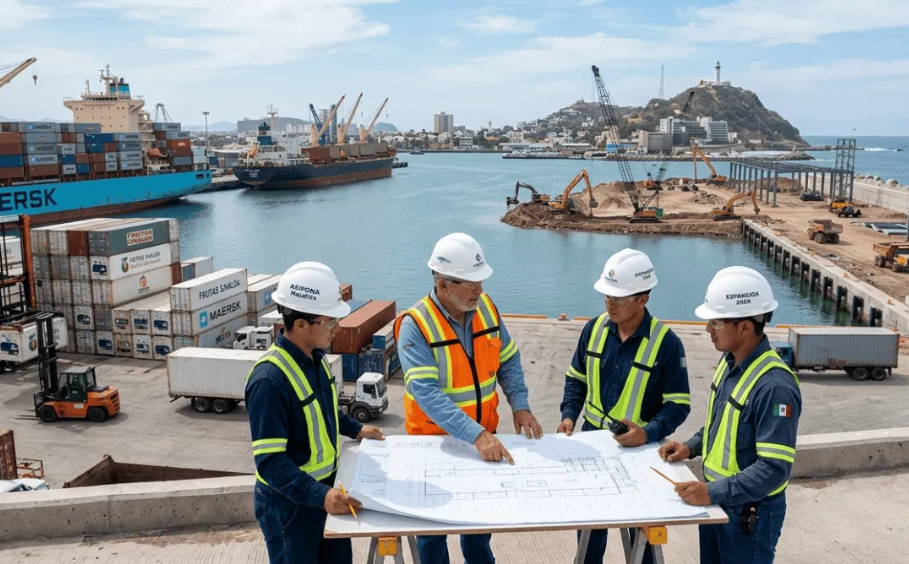

The Port of Mazatlán is advancing a modernization and infrastructure expansion strategy aimed at increasing its logistical capacity and improving the transport of agricultural products, primarily vegetables, from Sinaloa to national and international markets.
The importance of this infrastructure stems from the fact that Sinaloa is one of the country’s leading agricultural producing states, contributing a significant portion of the food that reaches consumers, in addition to maintaining a substantial share of agricultural exports.
According to information from Terminal Marítima Mazatlán (TMAZ), Sinaloa stands out in the national production of crops such as corn, tomatoes, and chili peppers, and accounts for approximately 38 percent of the vegetables produced in Mexico.
For agricultural exporters, a more efficient port represents a significant advantage, as it allows for reduced transit times, improved handling of perishable goods, and preservation of food quality through specialized infrastructure.
TMAZ reported that the terminal has the capacity to handle refrigerated containers, general cargo, and bulk cargo—services necessary for moving products such as tomatoes, chickpeas, avocados, and other agricultural goods.
TMAZ General Manager Mauricio Ortiz noted that the modernization of equipment and processes has improved the port’s operations.
“TMAZ has positioned itself as an agile, highly versatile terminal with great flexibility in terms of turnaround times. Furthermore, with the fleet and equipment renewal, we have increased our efficiency, distinguishing ourselves on the Mexican Pacific coast,” he stated.
For its part, the Mazatlán Port Authority (API) reported that it is pursuing expansion projects, technological upgrades, and improvements to customs processes to strengthen the logistics chain.
The port covers an area of 496 hectares and is connected to the Mazatlán-Durango highway, a route that facilitates access to new markets for the state’s agricultural production and enhances the competitiveness of Sinaloa producers.
Source: debate