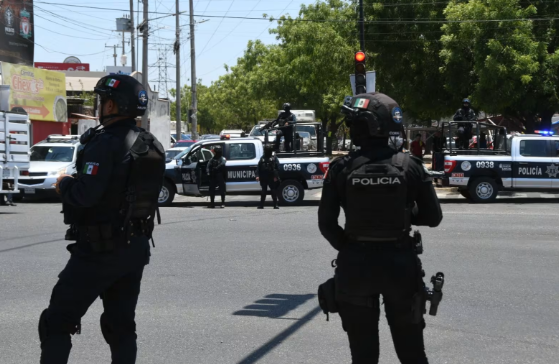

In a state where municipal police officers have been murdered and kidnapped, 167 men and women are currently undergoing initial training at the Sinaloa State Police University (UNIPOL).
Despite the fact that municipal and state police officers have been victims of attacks, kidnappings, and murders over the last two years—resulting in at least 80 officers killed between 2024 and 2026 across various regions of Sinaloa—UNIPOL reports that young people interested in joining the force continue to arrive, and there has been no significant drop in enrollment compared to 2025.
UNIPOL officials explained to ESPEJO that the primary reason many cadets decide to train as state, municipal, or investigative police officers is a family tradition or a calling they have felt since childhood.
“In some cases, they state that they are the children or relatives of someone who was a police officer and they want to follow that career path, in a way. (…) We have had close contact with some of them, and that is one of the first questions: ‘Hey, why do you want to be a police officer? What drove you to become one?’ It’s a family matter.”
There are applicants, but municipalities need many more.
Of the applicants currently undergoing training, 36 are preparing to join the State Police.
The rest seek to join municipal forces.
The municipalities with the highest number of cadets are Mazatlán (35), Ahome (25), Culiacán (23), and Guasave (18). Other municipalities fail to reach even ten applicants.
Cosalá, Badiraguato, Elota, Escuinapa, Sinaloa Municipality, Mocorito, and Rosario have not found anyone willing to wear the police uniform this time around. Although the figures do not differ significantly from those recorded in 2025, UNIPOL acknowledges having observed a decline—or difficulties—in the ability of municipalities to recruit new personnel for their Public Security and Traffic Departments.
“We understand that they face certain challenges in securing the number of recruits they need to train. This may be due to various reasons or factors within the state or the municipalities themselves that influence the decision to join these forces.”
The situation in Escuinapa is particularly unusual; in April, the municipal security force’s personnel count dropped by 71 percent. This occurred amidst work stoppages, resignations, the murder of five police officers, and escalating violence in the region.
Despite this, the institution acknowledged that there is no formal assessment explaining why young people choose to pursue—or rule out—a career in law enforcement.
They noted that it is up to each municipality to identify the factors that either facilitate or hinder their recruitment processes.
Source: revistaespejo