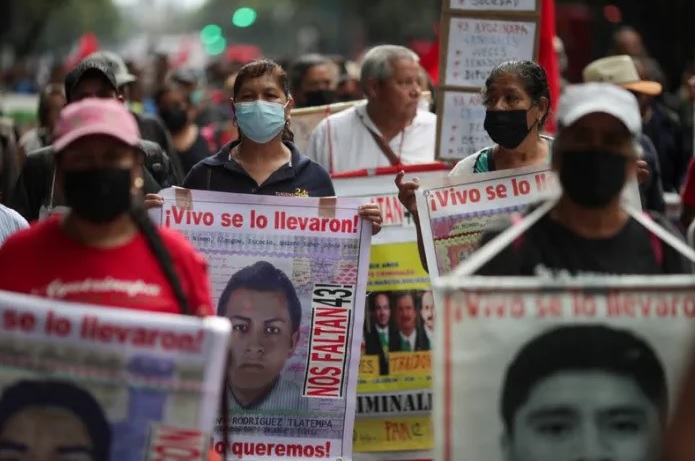

A recent opinion piece in Expansión Política accuses the Mexican government of deliberately manipulating disappearance statistics, reducing official figures from over 130,000 missing persons to just 43,000. Critics argue this adjustment erases victims from public records and undermines families’ search for justice.
- Author: Jorge Triana, columnist and politician.
- Context: President Claudia Sheinbaum presented a long-delayed report on disappearances in March 2026.
- Delay: The report was postponed 11 times over 380 days, raising suspicions of political calculation rather than administrative disorganization.
Key Allegations
- Statistical Reduction: Official records previously listed 130,000+ disappearances. The new report recognizes only 43,000 cases, achieved by reclassifying nearly 90,000 files.
- Method: If authorities found minimal administrative traces of a person—such as paperwork or activity—the case was removed from the disappearance category.
- Timing: The report was released on a Friday before Easter holidays, a moment when public attention typically wanes.
Contradictions
- Unidentified Bodies: Mexico has over 72,000 unidentified corpses in forensic services and mass graves, exceeding the number of disappearances officially acknowledged.
- Investigations: Of the 43,000 recognized cases, only around 3,000 have active investigation files, leaving most without formal inquiry.
Reaction from Families
- Mothers’ Groups: Search collectives rejected the government’s figures, insisting they were not consulted and continue to find remains independently.
- Distrust: Families argue the government is erasing victims on paper rather than addressing the crisis.
Broader Implications
- Political Strategy: Triana claims both former President López Obrador and Sheinbaum prioritized image management over truth, normalizing evasion and now outright reduction of figures.
- National Crisis: The manipulation highlights Mexico’s ongoing struggle with violence, impunity, and lack of transparency in addressing disappearances.
The controversy underscores a deep disconnect between official narratives and the lived reality of families searching for loved ones, fueling debate over accountability and the state’s role in confronting Mexico’s disappearance crisis.
Source: Expansión Política